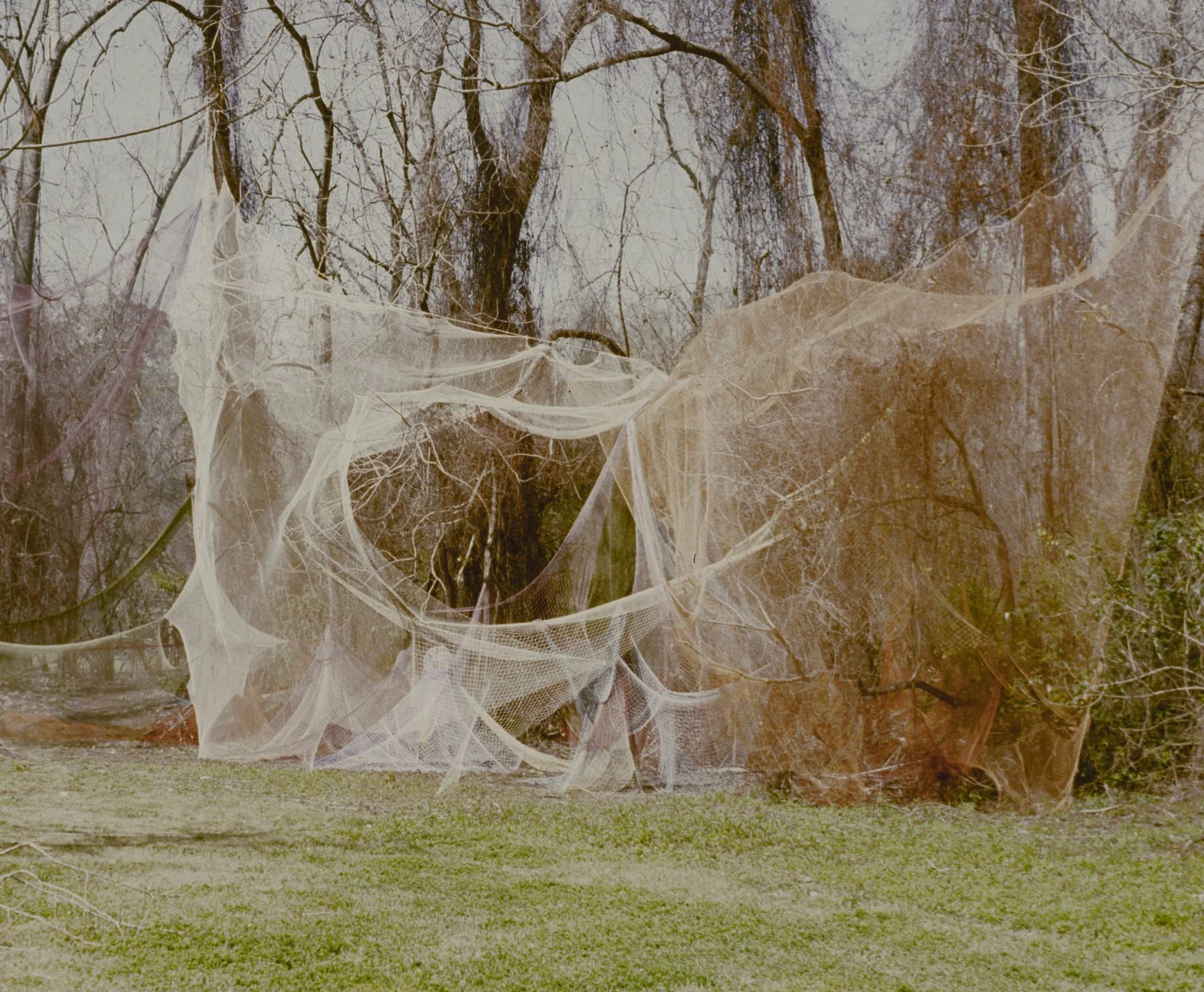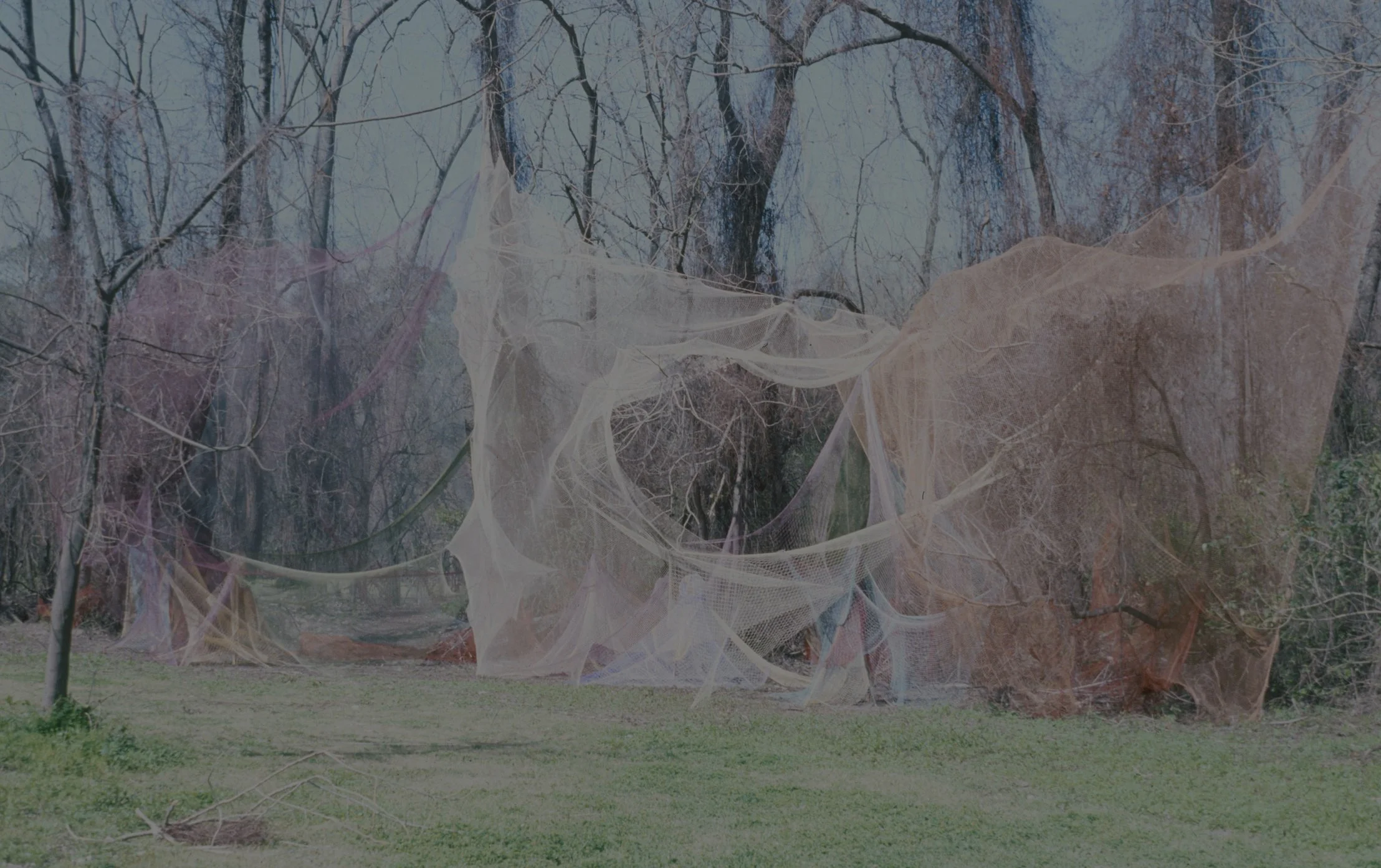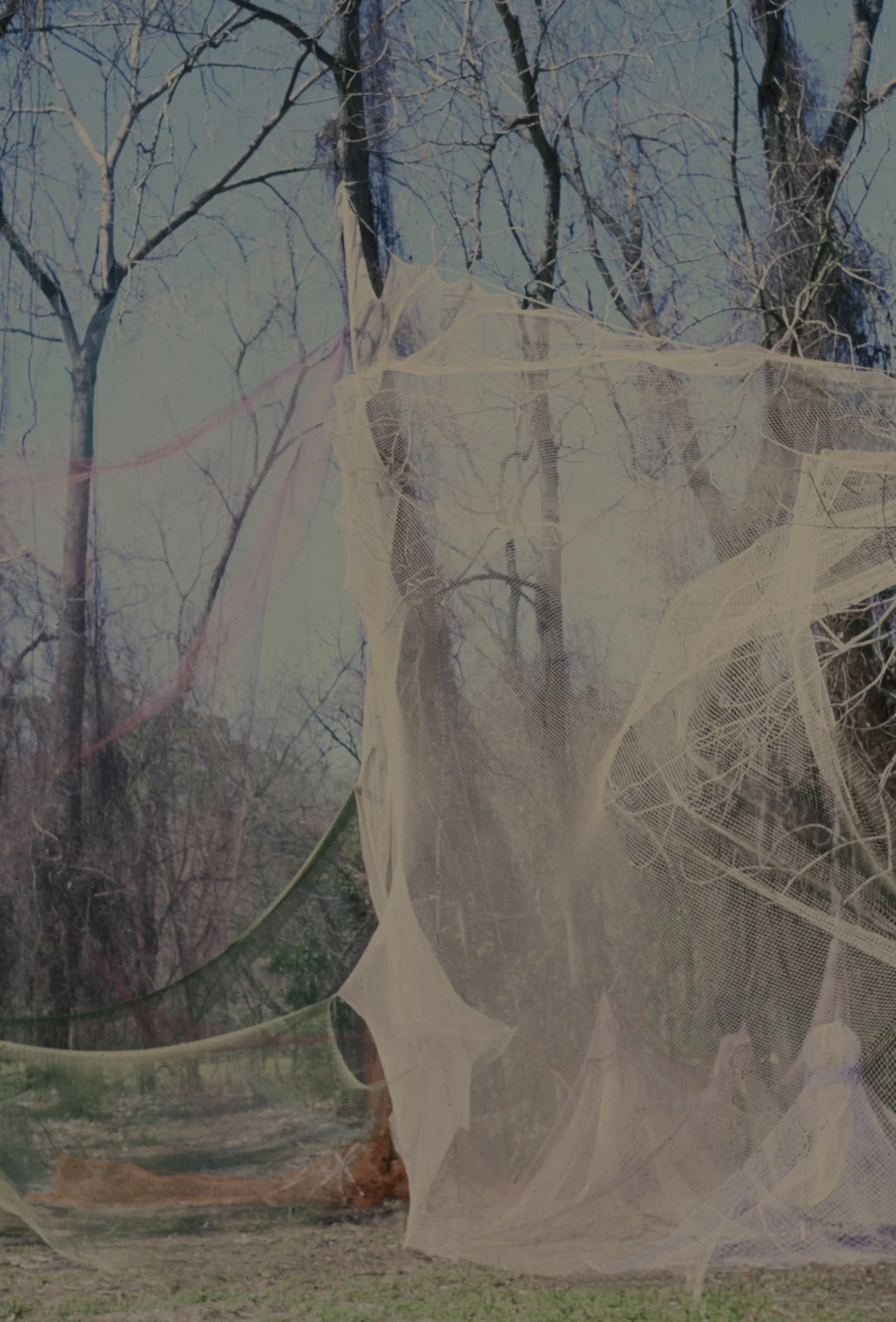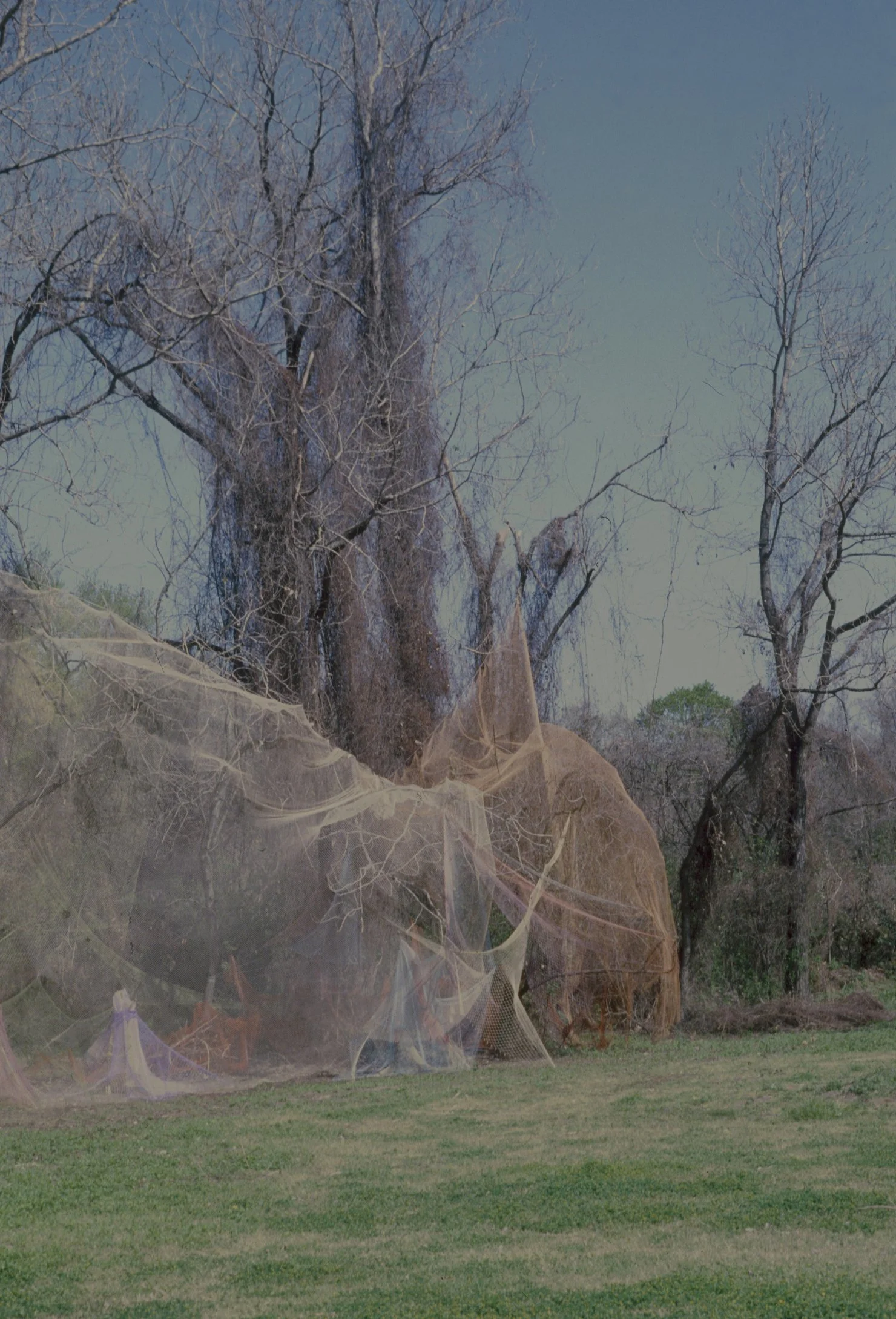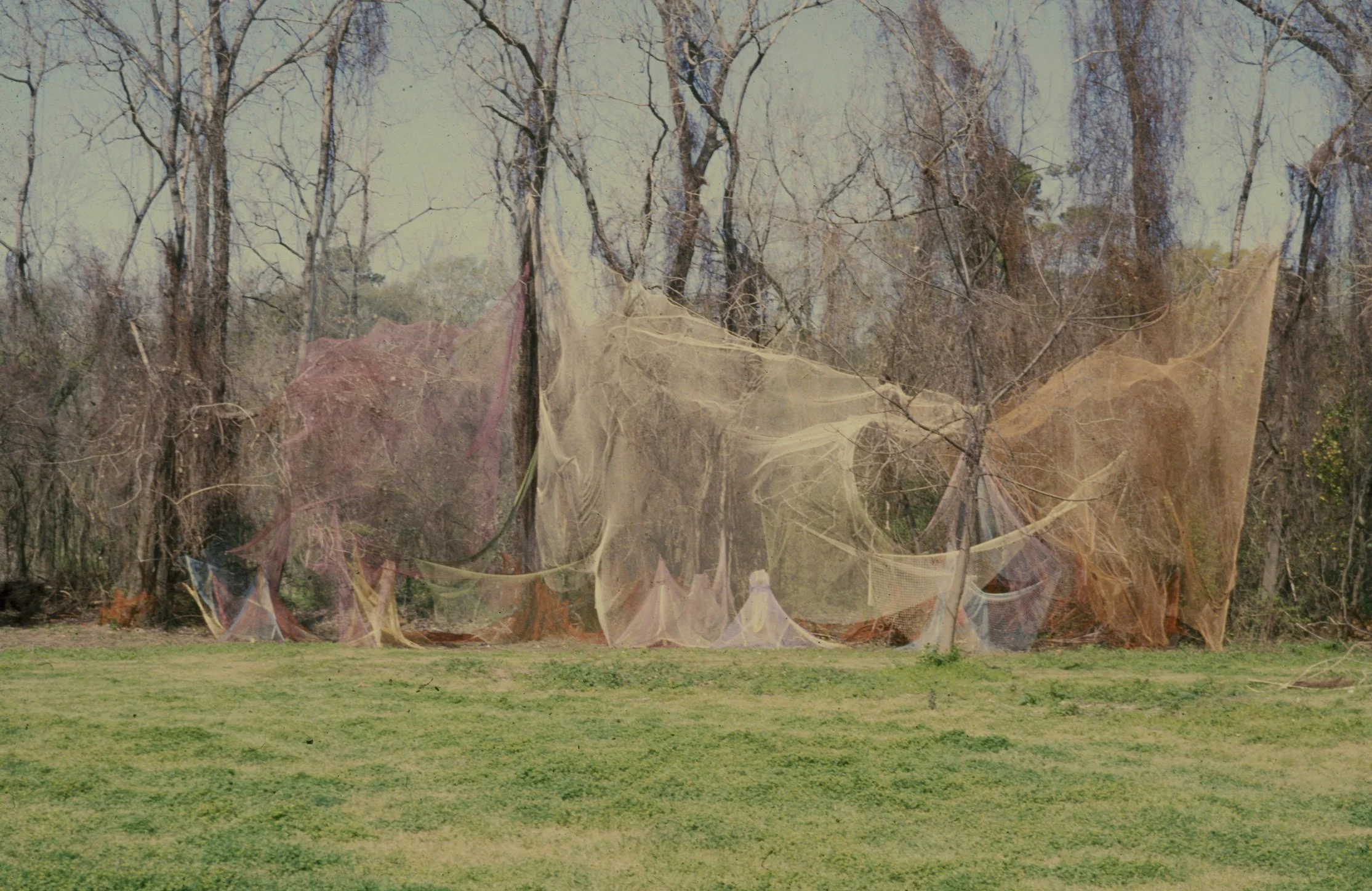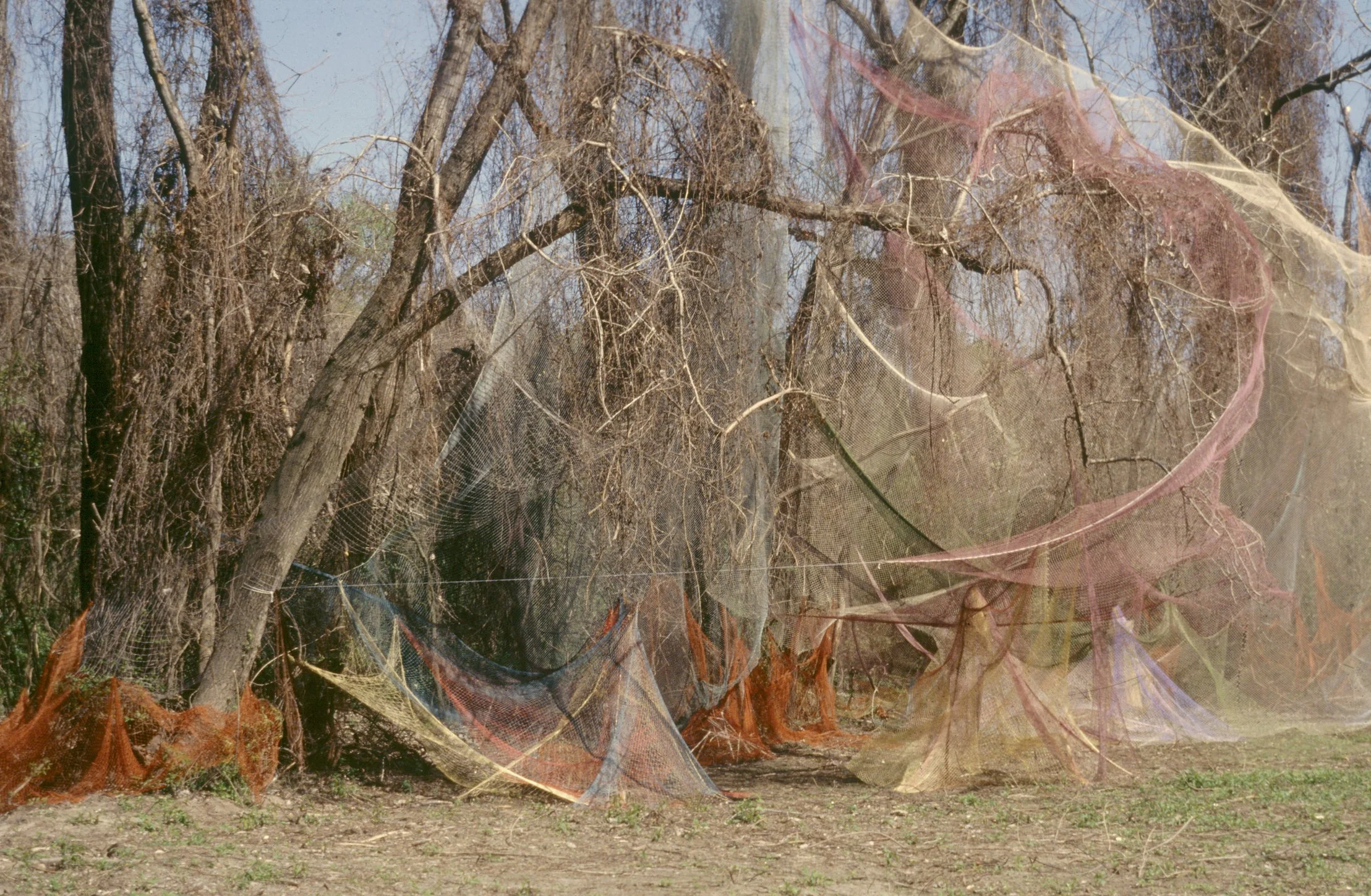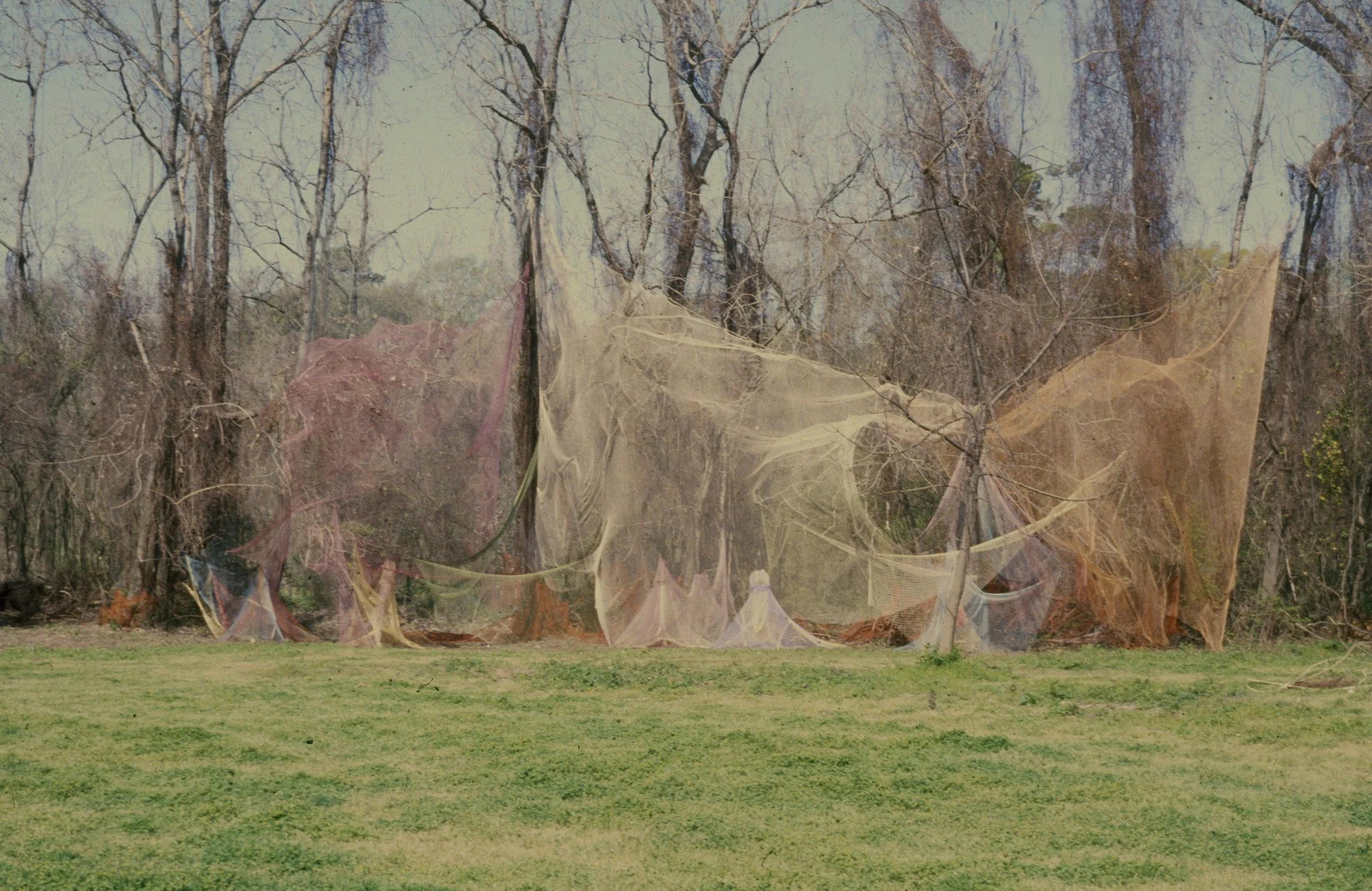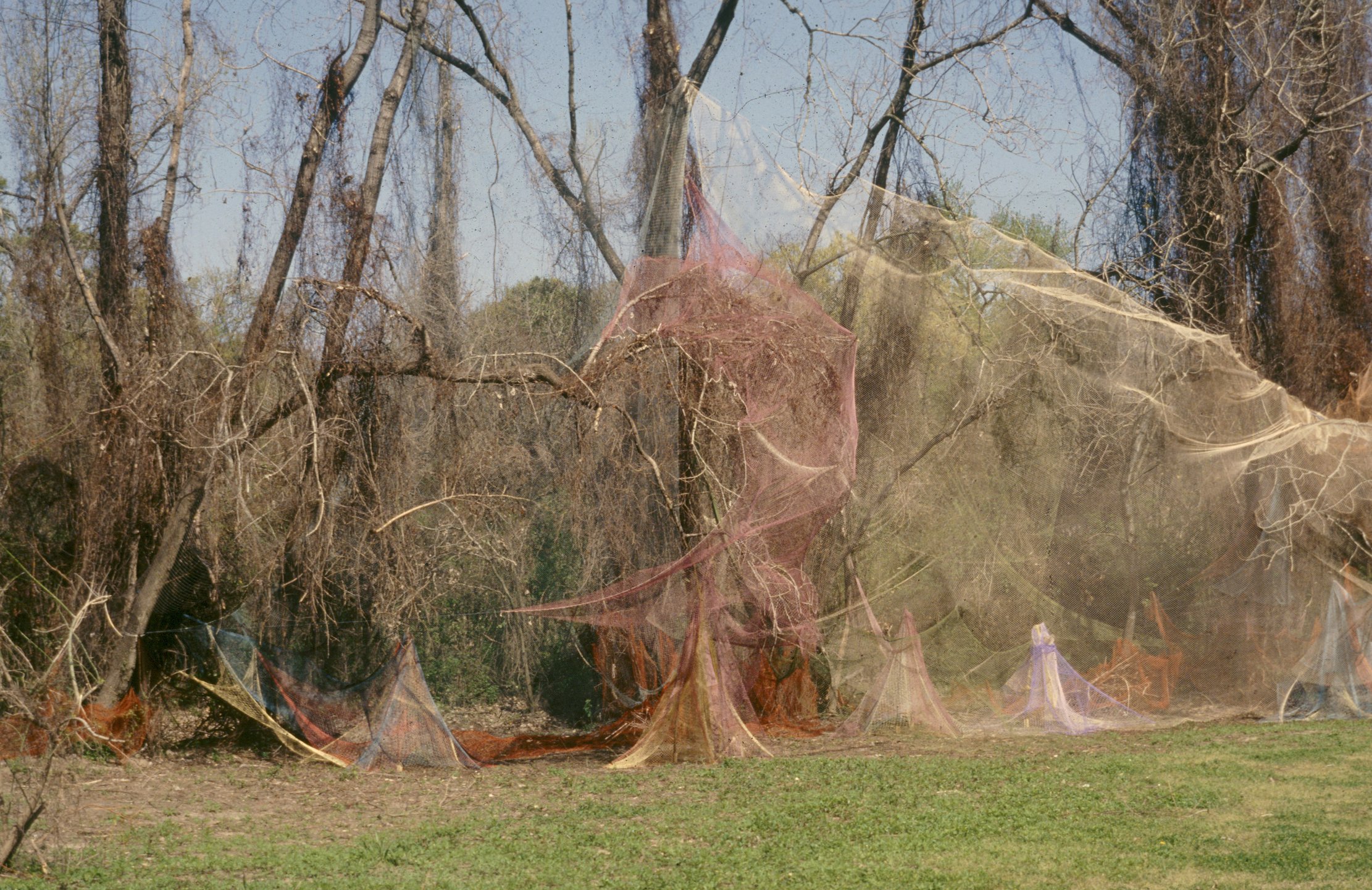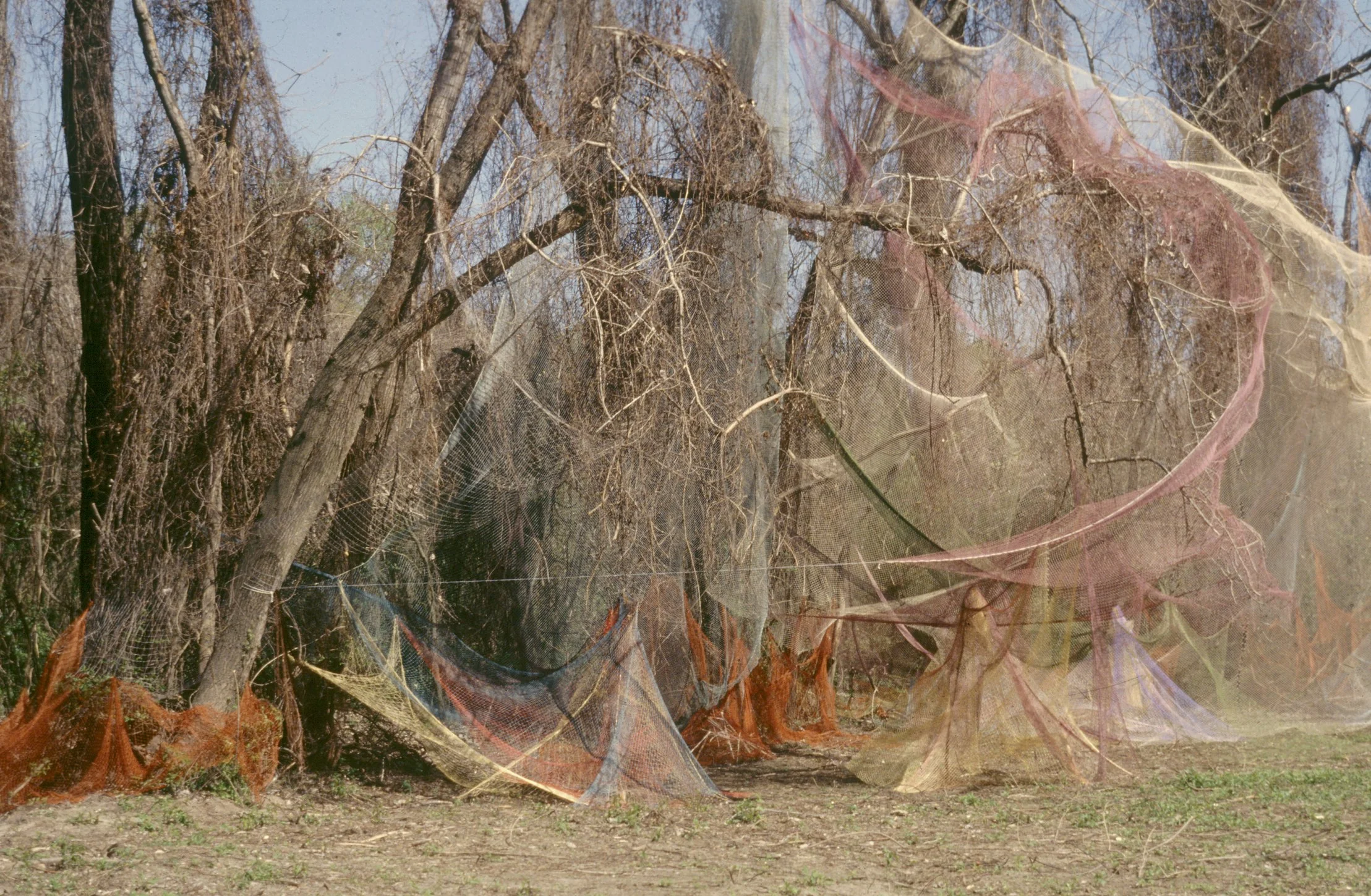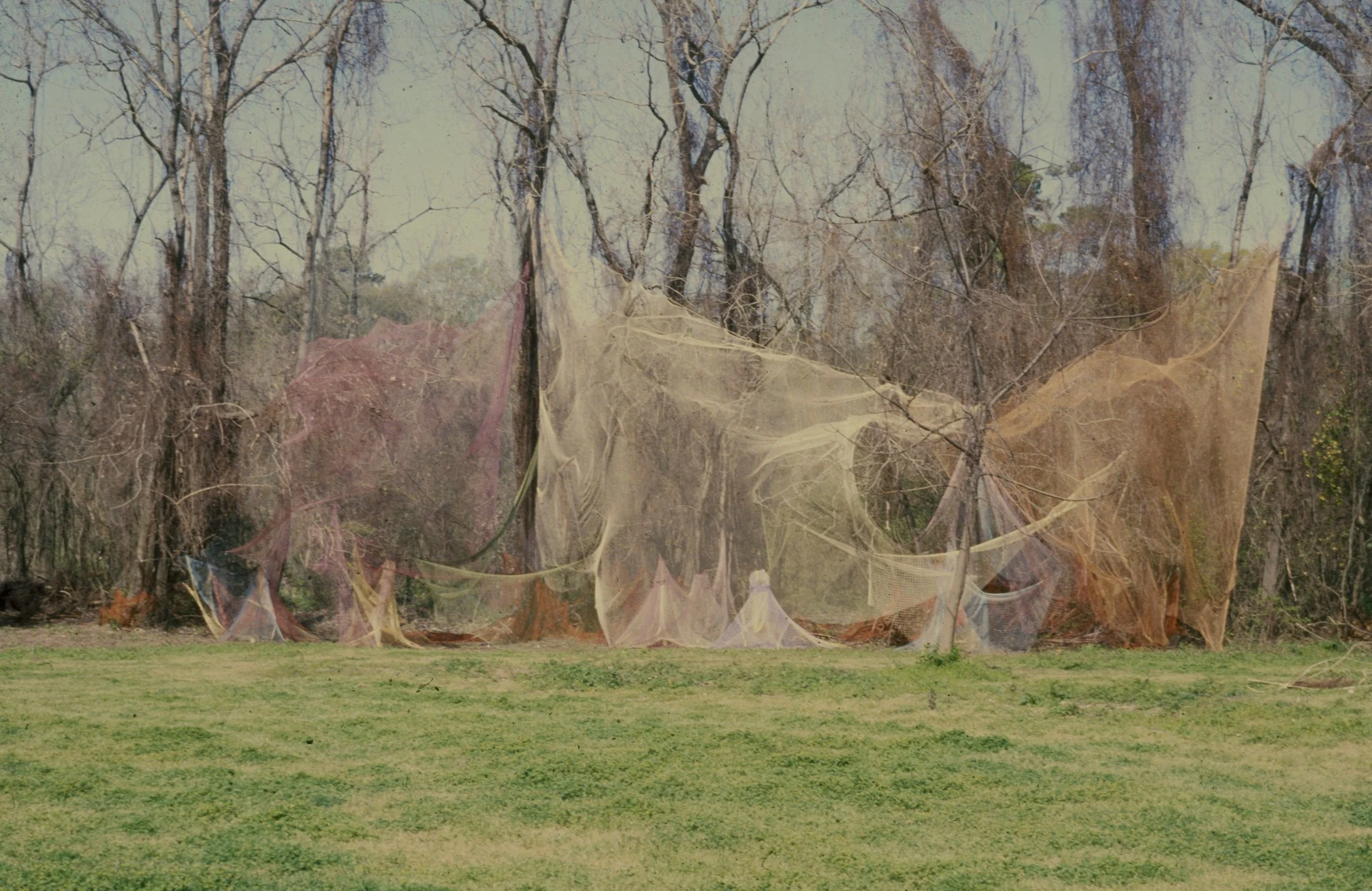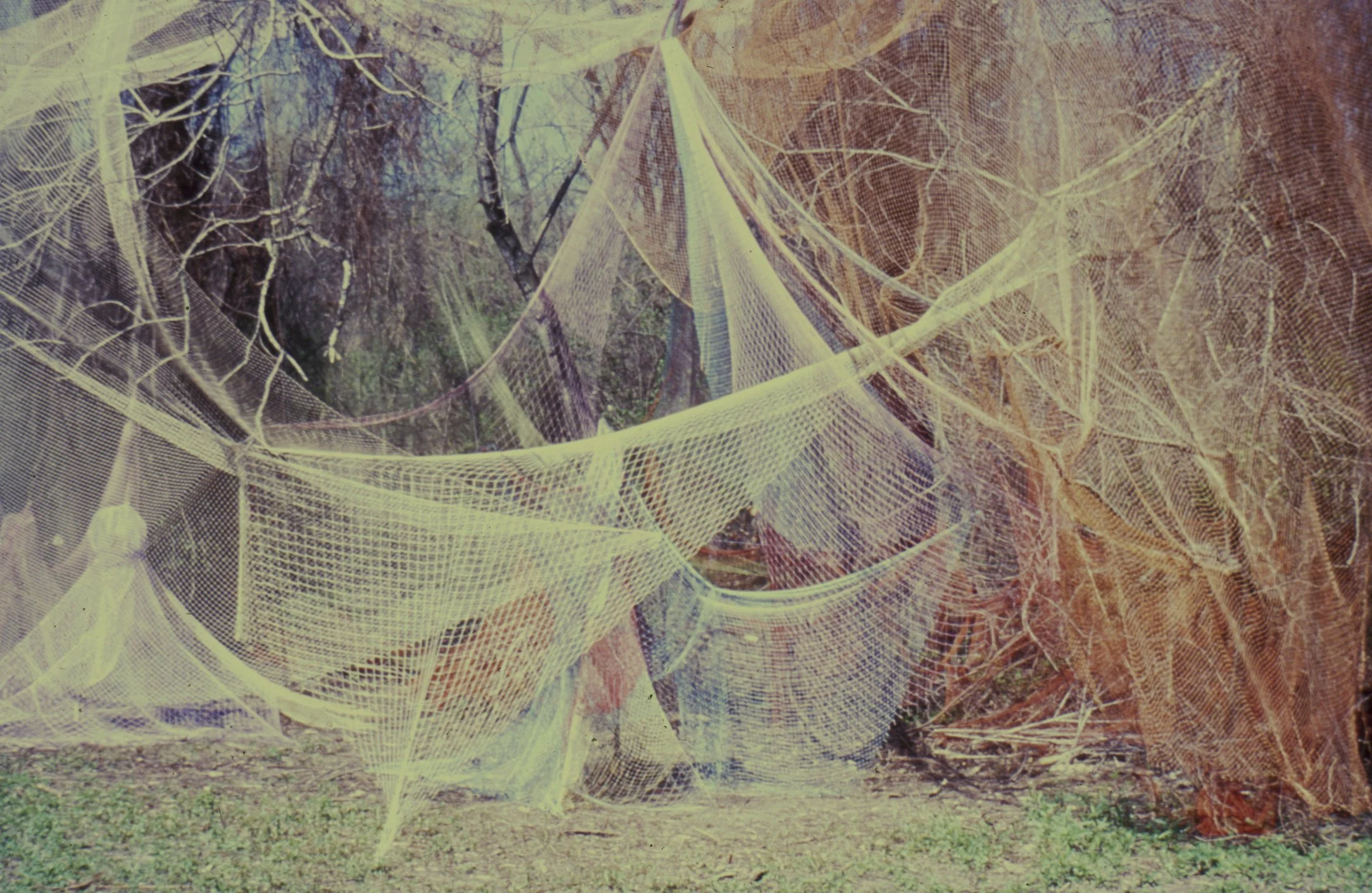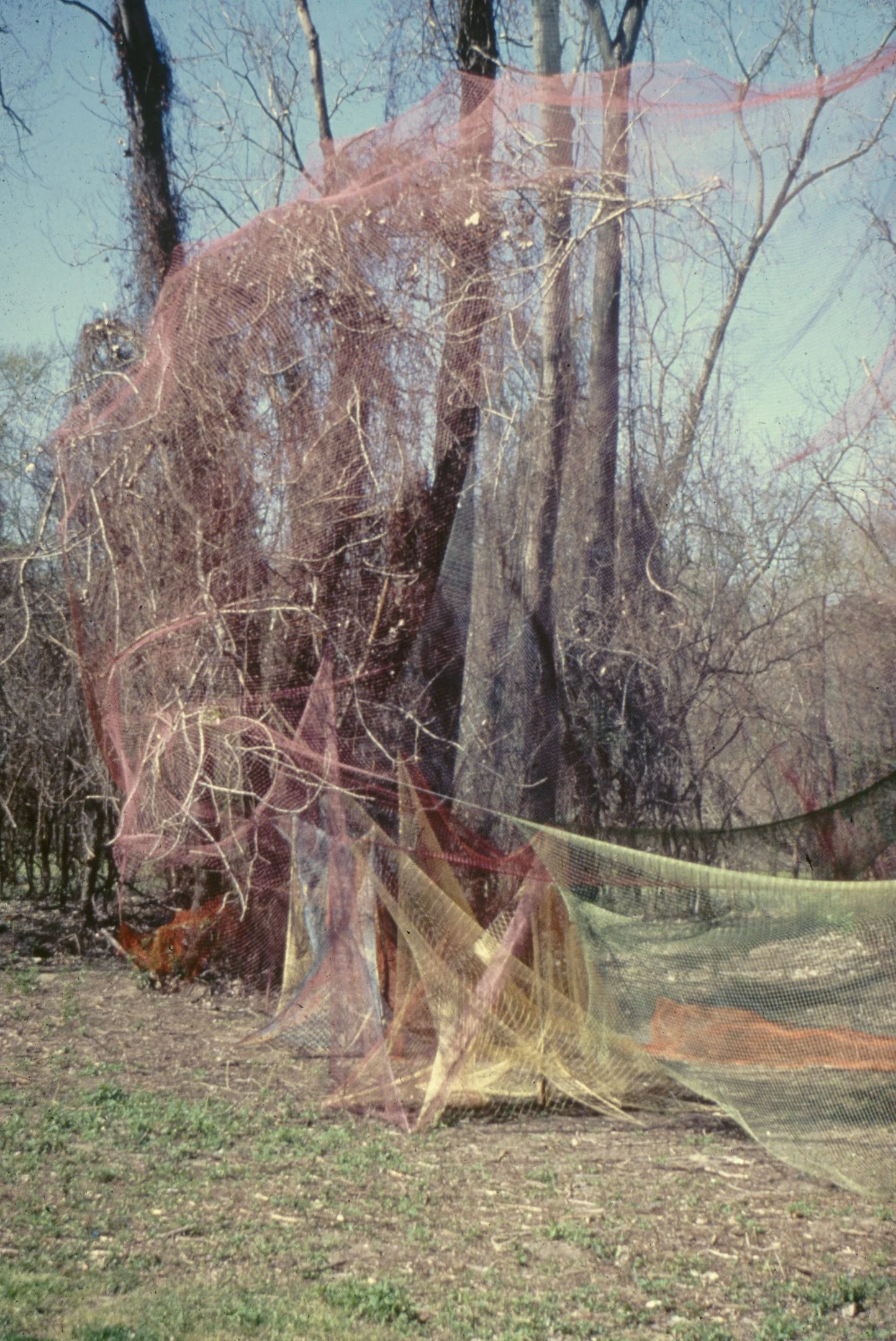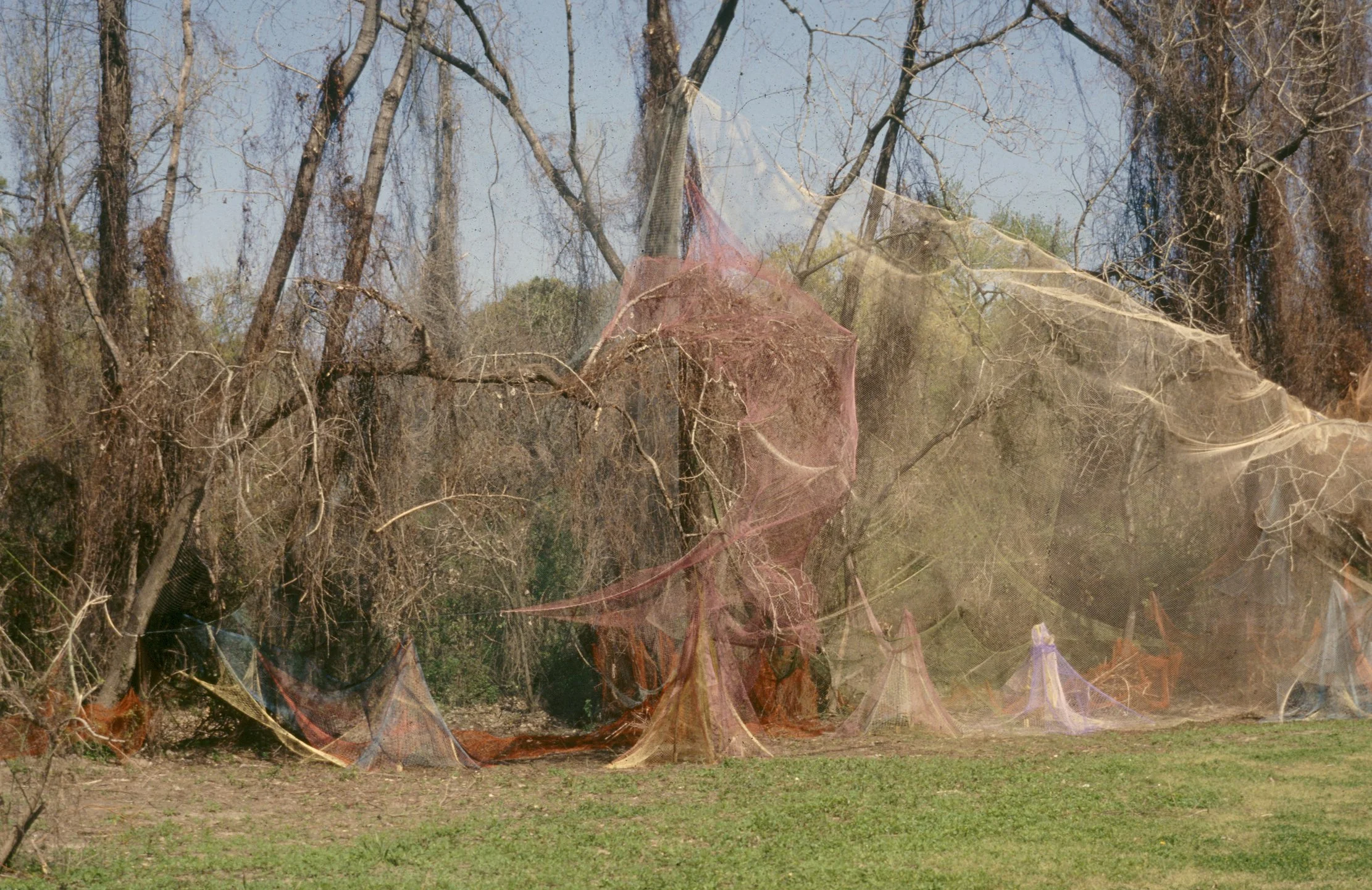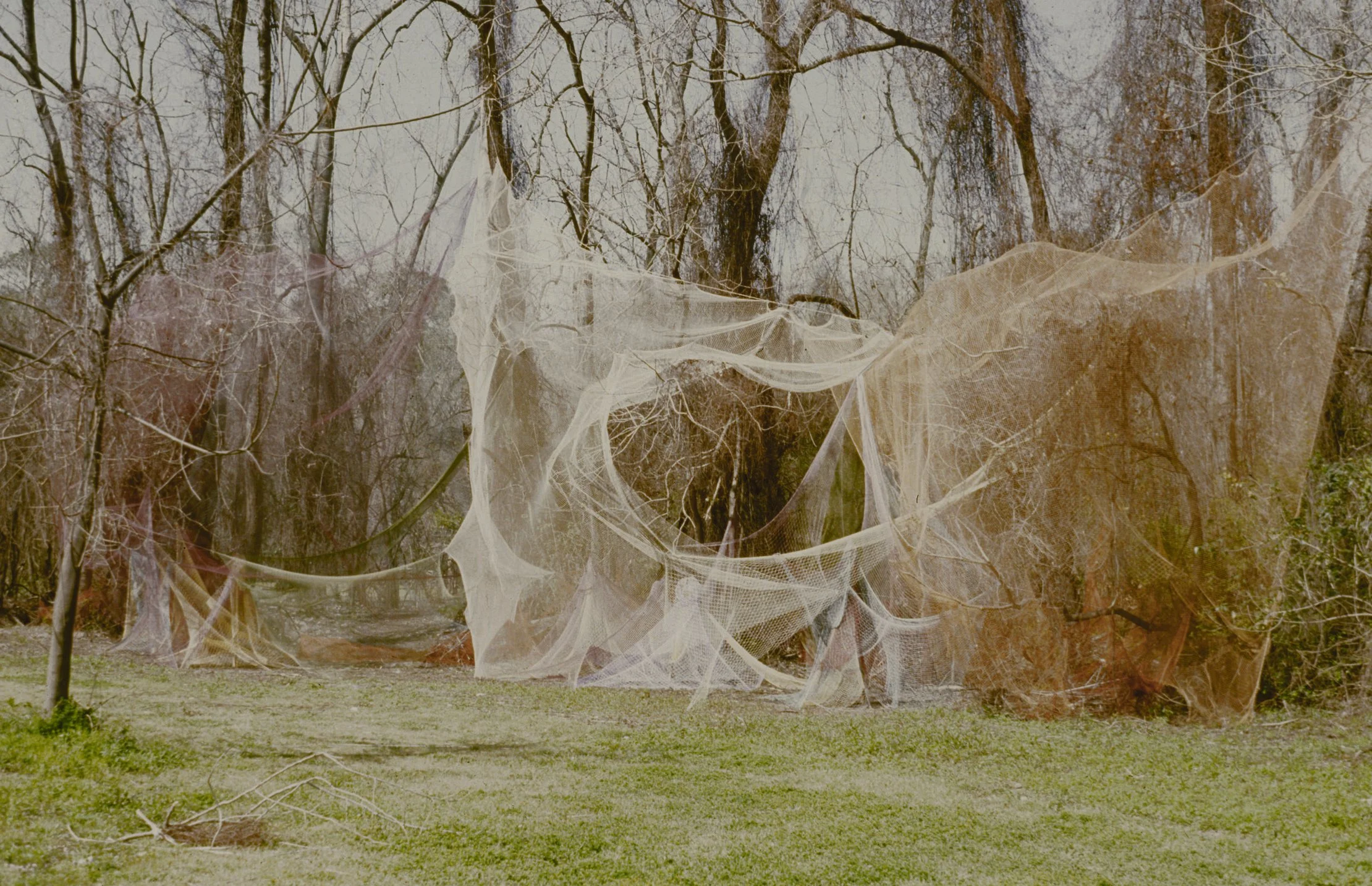
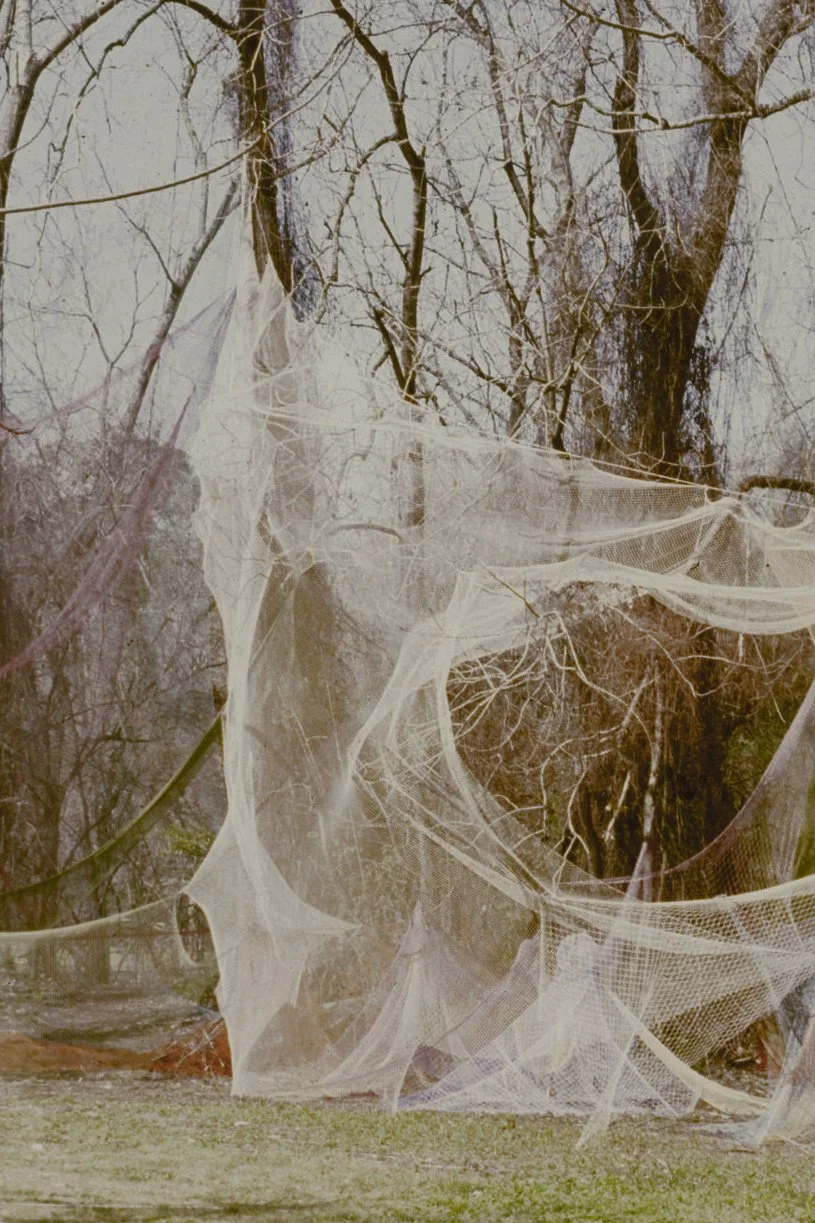
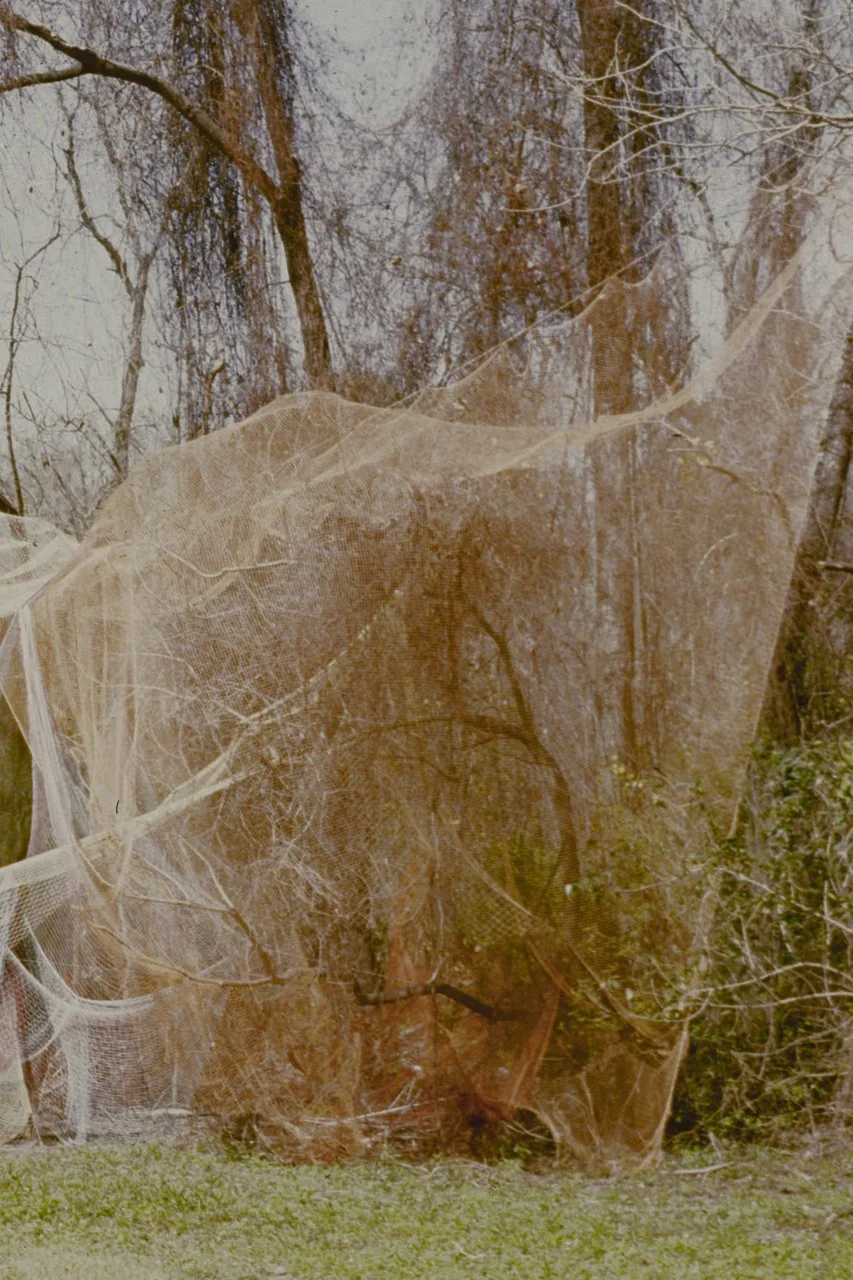
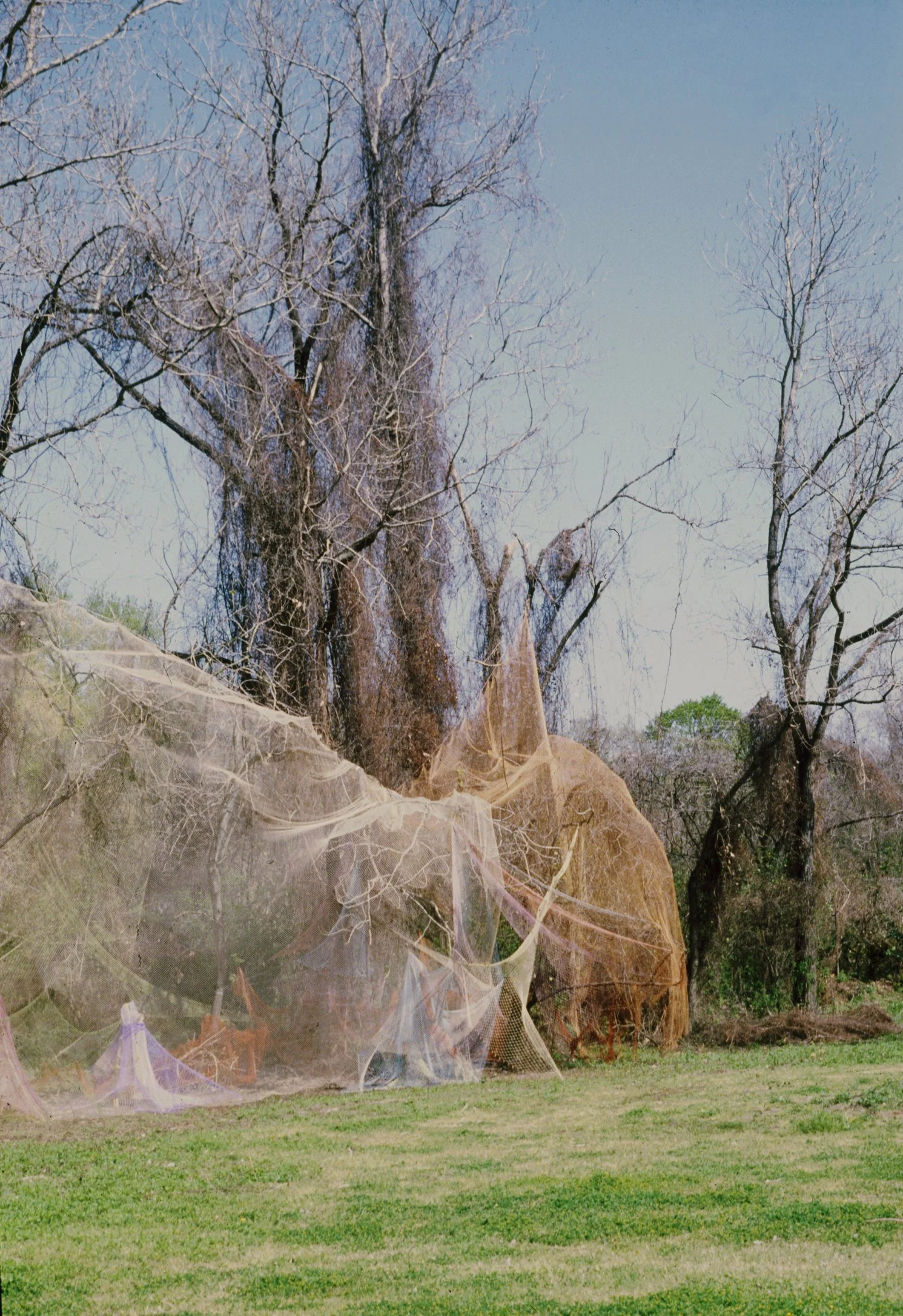
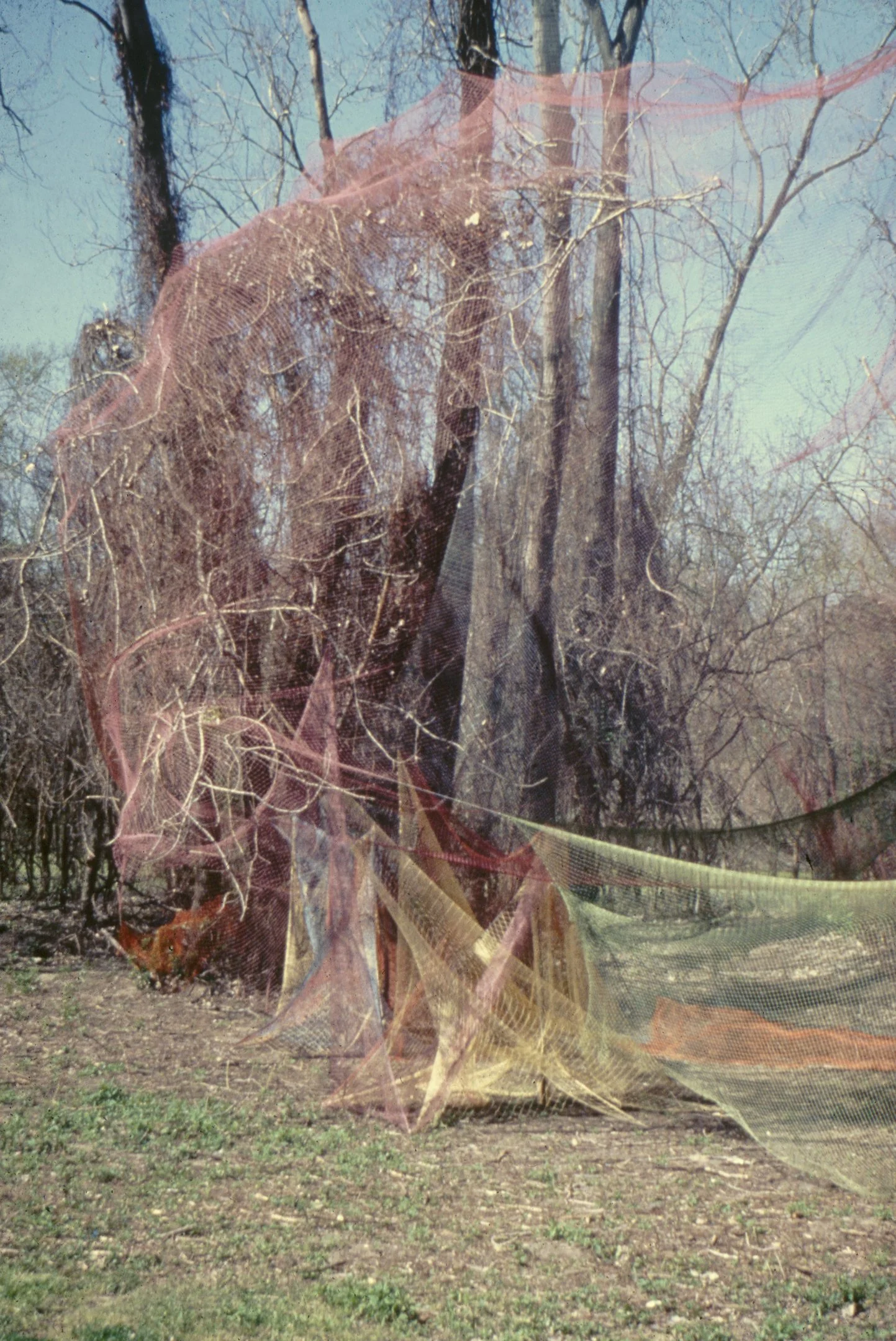
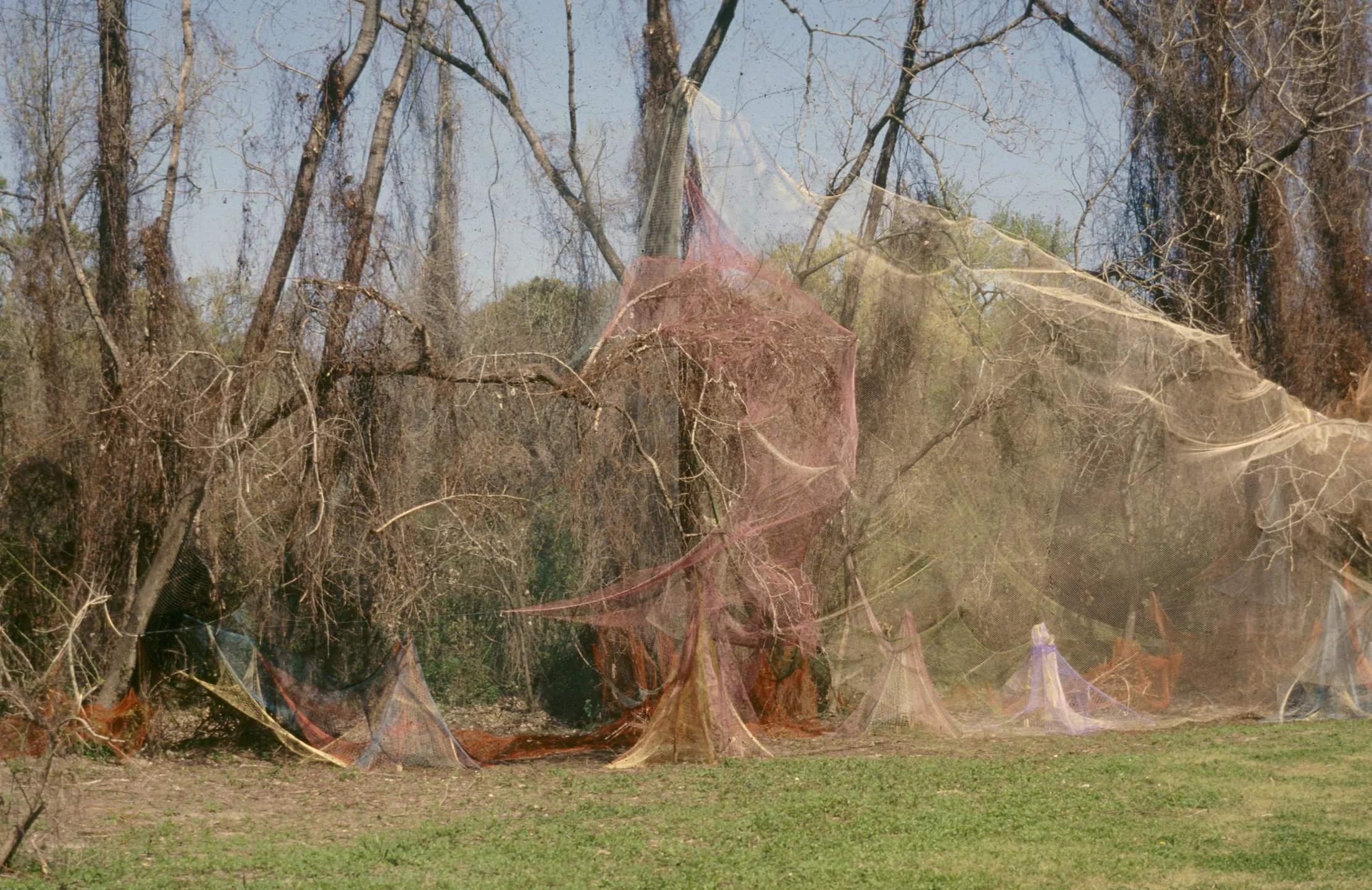
Bayou, 1983, fisherman’s net, 35’ x 60 ‘ x 30’ , Buffalo Bayou Park , Houston, Texas
Whitewalls A Magazine of Writings by Artists (Photographs of publication)
HOMAGE TO SADNESS:
A Memorial to Charles M. Connor
Maureen Connor
Sometimes I think I imagined it. I try to remember the exact words he used but I can hardly be sure I’ve even got the gist of them. My father and I were walking through the “English Room” at the Frick. It’s really the dining room although the table seems vestigial now. Smothered with flowers it functions more like an island around which the sea of viewers flow. Adrift in the low tide of the mid-day, mid-week art public, I was feeling more like flotsam than part of a flotilla. We had just seen my show, my first in a commercial gallery and I couldn’t help reading this museum outing as a plan to show me some real art. So, I was doing my best to control my seething resentment and the absurd sense of competition I was feeling.
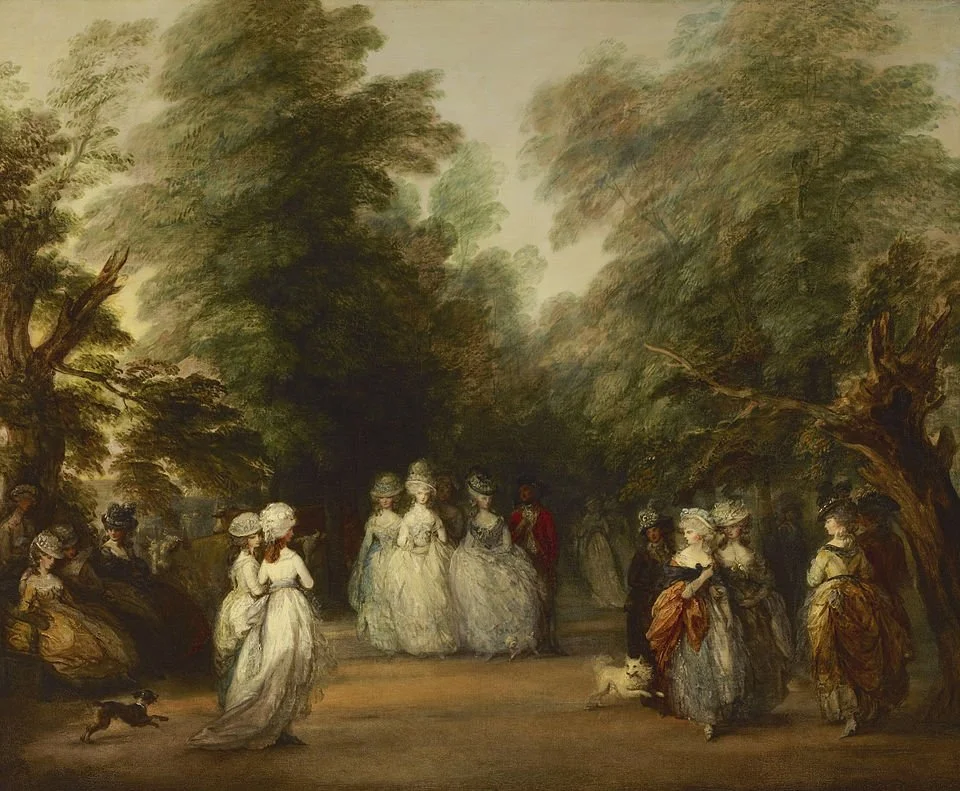
Then we came upon Gainsborough’s The Mall in St. James’s Park and everything changed. I was able to see something in the painting I had not seen before. I felt overtaken by a sense of the teleological importance of the elements of the painting, of the cosmic unity of everything in a grand world view. Rather than inducing the nostalgia and sentimentality one might expect from a pastoral landscape I felt the momentary cessation of such longings, the fulfillment of a fantasy rather than the creation of one. At the same time I was grounded by the kind of oppressive sadness I feel on a long, dull Sunday afternoon that leads only to a Monday of routine predictability. These conflicting sensations seemed to stem from the illusiveness and mirage-like quality of the painting which implied the impossibility and impracticality of maintaining such a sublime sensation.
Gainsborough’s St. James’s Park would not be ranked among the world’s greatest paintings. It doesn’t appear to pose important questions, reveal universal truths or expand consciousness. The complexity of my response exposes the fact that the painting’s apparent simplicity is deceptive. On one level it is an example of a 17th and 18th century genre, a pastoral landscape of the sort popular with the European courts. Because it romanticized the harsh realities of peasant life the pastoral satisfied upper class nostalgia for simplicity. Yet the painting seems to parody the domestication of the landscape and peasantry by appearing almost two-dimensional, like a stage set. The trees, on close observation, look as if they were constructions of board and muslin, thus becoming a metaphor for the artificiality of the pastoral form.
However, my perception of this aspect was not what made the work so moving for me. It only provided the underpinnings; I was then able to see the figures in contrast to the theatrical motif. Instead of looking like carefully posed actors they seemed more like ghosts draped in Spanish moss. The gauzy figures and mossy trees together became hallucinatory, dreamlike, providing me with a wonderful escape from an uncomfortable situation. For me, the longing best satisfied by St. James’s Park was the need to escape.
But any competent pastoral scene could provide, in fact was intended to produce, a momentary, superficial escape. What I felt was something much deeper, and made so, I think, because of the contrast Gainsborough created between theatre and dream. The conflicting perceptions combined to allow a giddy disorientation which resulted in a suspension of disbelief. Yet I was also kept grounded by the quality of parody present in the painting which prevented the work from becoming a saccharine idealization. The dream-like quality, on the other hand, keeps it from being mere social comment. But I was always aware that this departure was evanescent, hence the sadness. By gently tethering me to reality, Gainsborough paradoxically allowed me to imagine perfection in my own view of it, not his.
So, Gainsborough took me by surprise. All the more so because I felt there was some relation between the equivalence he established between his muslin trees and mossy gowns and what I hoped to evoke with fabric as a medium in my own work.
But what was most extraordinary of all was that my father saw it too. He turned to me after looking at the painting briefly and said “Is that what you’re getting at, like those trees and gowns?” or something like that. The pieces he had just seen were large white organdy sculptures, folded and starched to provide structure. I too, wanted fabric to imply all sorts of qualities from mist to marble, each association playing off another until the contrasts provided a similarly self-aware escape as I had experienced while looking at St. James’s Park. Some of my intentions had become more conscious. And at the moment this occurred my father told me that I had already been successful.
In what way can escape be made valuable — different from the popular forms such as adventure stories or pornography? How can it be translated into transcendence? How can something otherworldly, something totally unattainable be relevant to contemporary culture? My experience with my father suggests some tentative answers to these questions.
His fantasies and expectations have been manipulated by the media as well as resulting from his own naïveté. It is difficult to avoid the escapism valued by contemporary culture that seems determined to desperately deny the ultimate inescapability of certain aspects of life. It is, of course very painful to admit that there are some losses or disappointments for which one can never be fully compensated. Yet, for my father and me, art that authentically addressed the unattainable paradoxically helped us both reconcile irreplaceable loss.
As we stood there looking at the Gainsborough I knew for certain that my father had a much deeper awareness of the nature of art and placed a higher value on it, than I had imagined. Although he couldn’t fully articulate the feeling (neither could I at that moment) he seemed to express an understanding that painting and sculpture were endeavors which sought to capture more than a likeness of a well chosen subject. His recognition of art as more than just a skill or craft meant that he sensed my own higher ambitions and that, in spite of the many disappointments I may have caused him, I was now somewhat vindicated. My divorce, my lack of offspring, my lack of financial success, my seemingly alien values and goals all became instantly perceptible through his newly acquired understanding because my work seemed to fulfill at least some, if not all, of the qualities he deemed necessary to art.
I was given the opportunity to design an outdoor piece in a park in Houston, Texas about six months after he died. It didn’t take long for me to think of the Gainsborough and to plan the installation as a memorial to my father based on the painting. The Buffalo Bayou, as the park is called, is a long green stripe near the center of Houston. It has great variety in its landscape including flat open fields, carefully kept gardens with fountains, and a swamp with very tall, mostly dead trees. It was this last that provided the background and structure for the piece. Draped in vines and Spanish moss, the trees formed a perfect proscenium, as if Gainsborough had conjured them up. The installation was meant to evoke some of the qualities I had responded to in the painting, not to be a replica or even an hommage but an ephemeral monument signifying both the difficulty and the acceptance of loss.
My father died Sunday, August 22, shortly before midnight. We had dinner together that evening and I had left him about ten. He was very alive. Two hours later he was no longer. Such a miniscule difference between life and death. So subtle, like holding your breath or closing your eyes or going to sleep. These actions take you closer to the feeling of death as I imagine it but are certainly not the same. And, that incredibly unique combination of body, mind and experience who was a living being just a few hours before ceased to exist as I knew him. The microscopic difference between life and death slowly expanded to the macrocosmic as I began to comprehend the end of the life of the person who gave me mine.
Gainsborough’s balance of theatre and dream seemed to parallel this difference between life and death. I wanted to explore this simile in my own way, hoping to better understand it. More than any other aspect, I wanted to capture the mirage-like quality of the painting. In this outdoor setting I wanted the piece to simultaneously dissolve into and set itself apart from the landscape. From a distance, I wanted the viewer to find it just perceptible enough to be drawn closer and once at close range to almost feel a part of the illusion.
To do this I felt the actual scale implied in the painting would be best, that is, trees four or five times as tall as the figures which were life-size. Such large proportions, thirty-five feet at the highest point and sixty feet across made it appropriate to use fisherman’s netting for the installation. On this scale the net had a gossamer quality that would appear and disappear depending on the amount of light it received, and from a distance it looked like silk chiffon. It seemed to best evoke Gainsborough’s relationship between muslin and moss. With this combination of size and material, I wanted the viewer to identify with the human scale and real setting and in contrast feel the departure from reality caused by the unexpectedness of the nets.
I defined the boundaries of the site by enclosing a space with five large nets suspended from and draped around the trees. Inside this enclosure I constructed forms meant to evoke the figures in a style much more ghostly and abstracted than those in the painting. Although I knew the net was not a permanent material, in relation to my indoor fabric pieces it seemed at least strong enough to resist the elements. In any case the exhibition of which I was a part was to last only two months. The evanescence of the material seemed to parallel my expectations for the life of the piece. I wanted to, in some way, satisfy the longing I felt, that same satisfaction I had experienced looking at the painting with my father. Of course, I knew this feeling couldn’t last. Similarly, I had expected the nets and figures to gradually disintegrate, become overgrown with vines, fade and become weatherbeaten. But I was not prepared for what did occur.
The actual installation of the piece took about four days after the initial preparation of the nets. It remained relatively intact for about three more. The figure forms on the ground were the first to disappear with the nets either disassembled in heaps nearby or nowhere in sight. The larger nets suspended from the trees were more difficult to dislodge. But they were easily shredded by knives or scissors or perhaps the weight of a dozen adolescent bodies.
Was the vandalism just another expression of random hostility or did the piece itself make someone sad, so sad they couldn’t tolerate it? Or was the destruction partly accidental —the result of someone entering into the fantasy too deeply? I had wanted the work through its delicate appearance, to express the fragile edge between life and death. In a way its own short life revealed more about this passage than I ever expected.